Lubri.ai by Abeille

AI + business intelligence

The specialised AI + BI sales companion for the lubricants industry.

Which grade, which approval, what the competitor's equivalent is, what the account is worth and where the margin sits. In your rep's hand mid-visit, on a phone, in their language.

Interactive product catalogue Compare grades, find alternatives, check approvals.
Prepare visits, react in real time The account's mix, history and next step before you walk in.
Ask the Lubri AI coach The technical or commercial answer, in your language.
Plugs into Salesforce · HubSpot · Dynamics 365 · SAP · your TDS library

Why not a general AI

VG 46 is not VG 32.

Lubricant sales sit between chemistry and commerce. A workshop owner wants to know which product carries the approval for the engines on their ramp. A plant maintenance manager wants changeover downtime cut. A fleet wants a price per litre that survives the next base oil swing. Three different conversations, and the rep has to be credible in all of them.

Lubri is built on that domain: viscosity grades, specifications, OEM approvals, applications and cross-reference tables are stored as data, not inferred from text. On top of that sit your own data sheets, your price list and your accounts.

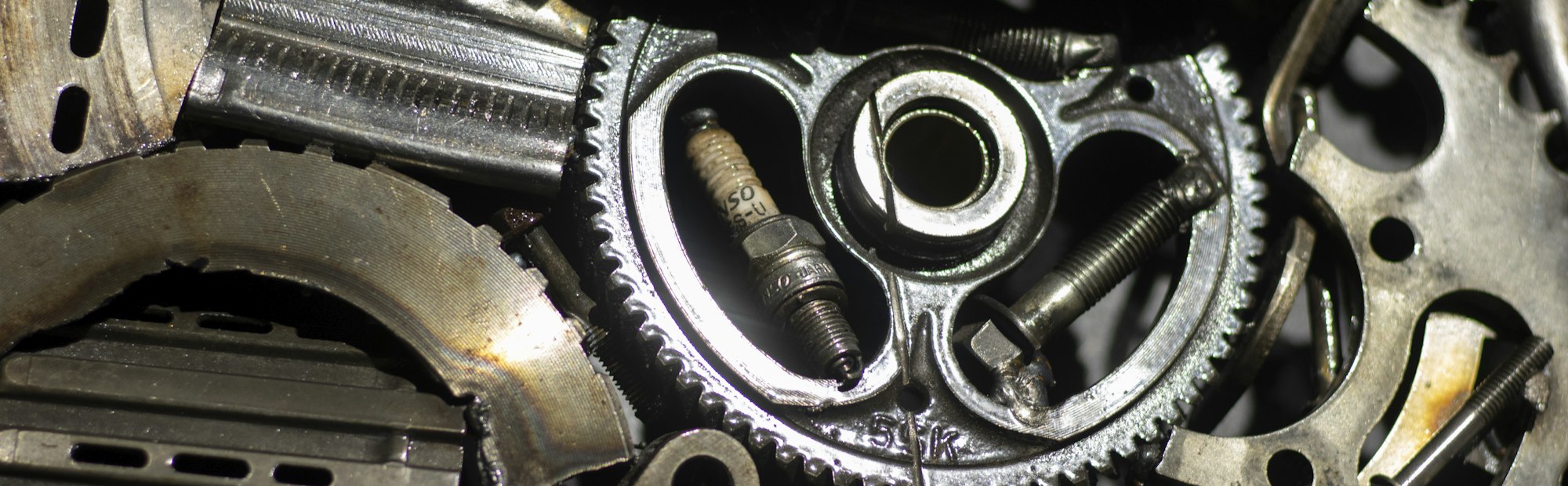
Close-up of oily gears, a timing chain and a spark plug inside a stripped engine

What sales leaders tell us

What changes with Lubri

These six things come up in almost every conversation with lubricant sales leaders, because we sold lubricants before we built this.

A sales manager standing at a boardroom table, talking through figures with three colleagues
01
Product knowledge is spread thin Hundreds of SKUs, pack sizes, OEM approvals, viscosity grades and regional variants. Only the veterans carry it all, and they are retiring.
The answer, in context Lubri answers like an application engineer: which grade, which approval, what the competitor equivalent is, and why, from your own data sheets.
02
Nobody knows what an account is worth Clients and prospects differ in size, equipment, consumption and credit profile. Reps rarely know the range an account is worth over its lifecycle.
A benchmark of the opportunity The companion benchmarks the account on business type, credit risk, track record and cross-sell potential, and puts a lifetime value range on it.
03
Distributors and direct accounts blur together Who buys what through whom, and at what margin, is hard to hold in your head on the road.
Account intelligence by channel Each account's mix, volumes and pricing history, direct or through a distributor, with the next step worked out.
04
Every visit turns into a price negotiation With base oil moving, customers ask for a discount by reflex and reps give it away to close. When costs rise, the arguments for an increase go missing.
Simulate the offer, protect the margin Lubri simulates the offer against the account's terms and your floor, so the rep trades volume, mix or payment terms instead of margin, and coaches the increase conversation.
05
Competitor moves you notice too late A rival's new pack size, promotion or approval shows up in a lost order, not in a report. Reps hear it in the field and nobody passes it on.
Field report, one tap Reps log competitor prices, promotions and equipment changes from site. It reaches the team the same moment, and the AI flags which accounts are now at risk.
06
Training does not reach the field Classroom sessions on the new range are forgotten by the second visit, and the benefits of your products stop being explained.
Coaching on the road Role-plays, quizzes and pre-visit prep in the rep's language, on the phone, between calls. Managers see the practice, not just the pipeline.

What's in the app

Modules

Which ones you switch on depends on your data and your rollout. Most teams start with Products and Clients, then add the offer simulator once the pricing rules are connected.

A sales rep on a call at a desk, taking notes beside a laptop
01

Ask Lubri

AI coaching

How it worksA conversational coach trained on your playbooks, data sheets and past deals. A rep asks it the question the workshop owner just asked, rehearses the price-increase call, or gets a debrief on the way out of the plant.

Why it mattersEvery rep gets a sales manager's coaching on demand, in their own language. Managers see who is practising and where it sticks.

02

Product knowledge

Products and approvals

How it worksYour catalogue, viscosity grades, OEM approvals, cross-reference tables and pack sizes, searchable and explained for the equipment in front of the rep.

Why it mattersNew reps are credible in weeks instead of a year, and the answer to the technical question is the one product management intended.

03

Account intelligence

Clients and channels

How it worksEach account pulled from the CRM and your ERP into one briefing: mix, volumes, pricing history, open offers and next step, direct or through a distributor.

Why it mattersMeeting prep drops from an hour to a minute, and nobody walks into a workshop without knowing what was promised last time.

04

Build and benchmark

Offer simulator

How it worksPrices a proposal inside your pricing rules and against the account's current terms, shows the margin at today's base oil cost, and produces a customer-ready summary.

Why it mattersOffers go out in the meeting instead of days later, and discounting stops being the default way to close.

05

Know the market

Competitors

How it worksRival ranges, pack sizes, promotions and approvals, built from your market intelligence and updated by what reps report from the field.

Why it mattersObjections about the competition get a factual answer, and product management hears about a rival's promotion the day it lands.

06

Signals from the field

Field report

How it worksOne tap to log what the rep just heard: a competitor price, an oil-analysis complaint, a fleet changing drain intervals. Tagged by account and topic, routed to the right desk.

Why it mattersField knowledge reaches the people who need it. Sales, product and technical work from the same picture.

Try it now · no sign-up

The demo

The demo below is the real interface on sample data: eight applications, twelve products, eight brands and a simulated chat. Search by use case, product or brand, or ask.

Lubri · demo workspace Sample data Simulated chat

Tabs, product pages, brand pages and the ask bar all respond. The chat replies are simulated. Full screen, plus the desktop version→

Who is behind it

Who built it

Lubri is a product of Abeille, whose sales-companion platform runs across mobility, banking, telecom, logistics and retail. Lubri is the lubricants version of it, built by people who spent years selling base oils, finished lubricants and greases through workshops, distributors and industrial accounts.

That is why the companion argues a price increase the way an area manager does, and why it treats a lost tender as a pack-size problem before a price problem.

Two greased hands holding a spanner over an engine bay

Industry-specific from day one

Grades, approvals and applications are modelled as data, not inferred from text.

Your documents are the source

Technical and safety data sheets, approval letters and cross-reference tables become the companion's memory, with citations.

Human experts behind the AI

Abeille's network of lubricant sales veterans sits behind Lubri for the conversations that need a person.

FAQ

Questions

What exactly is Lubri?
A web and mobile sales companion for lubricant businesses: a coach and technical reference, trained on your products, approvals, accounts and pricing, and connected to your CRM so its advice is grounded in your real deals.
How is it different from a general AI assistant?
A general model does not know that an ISO VG 46 hydraulic oil is not interchangeable with a VG 32 in a cold-start mobile fleet, or which of your products carries the approval the customer's OEM demands. Lubri is built on lubricant structure (grades, specifications, approvals, applications, pack sizes) and on your own documents.
What do you need from us to get started?
Your product data sheets and approval matrix, a price list, and read access to your CRM. That is enough for a working pilot. ERP, rebate schemes and oil-analysis data deepen it from there.
How long does a rollout take?
A scoped pilot with one sales team typically runs within weeks, not quarters. We agree the data sources, configure the modules you need and train the team in a single session.
Which languages does it support?
Nine at launch, including the technical vocabulary of the trade in each. Reps ask in their language and get the answer in it, even when your data sheets are in English.
Is our formulation and pricing data safe?
Your workspace is isolated and never used to train shared models. You choose which sources the companion can read, and sensitive documents can be scoped out entirely. Hosting region and retention are set to your requirements.
Do you replace our technical service team?
No. Lubri handles the questions that should not have needed a specialist, so your technical people spend their time on the ones that do.
What does it cost?
Pricing depends on team size, the modules you switch on and the integrations involved, so we quote it after a scoping conversation. Request a demo and we will walk you through it.

Pricing on request

See Lubri on your own range

Request a demo and we will walk a scenario from your business: your grades, your approvals, your accounts.